

Central Asia, a land of rugged mountains, ancient Silk Road cities, and vast deserts, is quickly becoming one of the most fascinating regions for adventure travelers. While iconic places like Samarkand, Almaty, Issyk-Kul and Pamir are already well-known, there are still countless remote corners waiting to be discovered — landscapes untouched by mass tourism, where authentic traditions and pristine nature define the journey.
For travelers seeking something beyond the guidebooks, 2026 is the perfect time to explore the region’s less known places. Below are our top underrated destinations. Two from each country, that capture the raw beauty, diversity, and cultural depth of Central Asia.
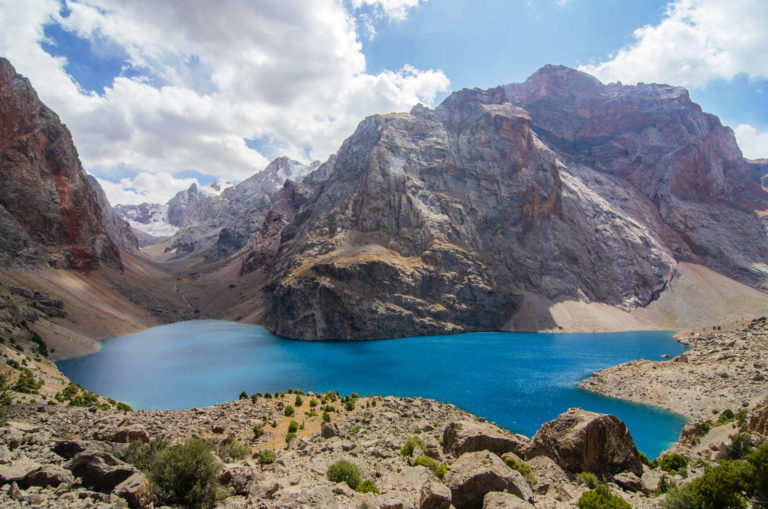
Big Alo Lake is one of the most impressive and pristine lakes in the Fann Mountains, largely due to its remote and hard-to-reach location. Many trekkers approach it via the Chimtarga Pass (4,750 m), making an overnight stop on its tranquil shores — an unforgettable experience as the sun sets behind towering peaks and the lake mirrors the surrounding mountains.
For those seeking a less challenging route, it is also possible to reach Big Alo Lake in a single day via the Archmaydan Gorge, offering stunning views without the multi-day trek. Big Alo can also be combined with longer trekking routes: one that starts in Artuch and ends at the Seven Lakes, or a route starting at Alauddin Lake and ending in Saratog Village through the Dukdon Gorge. The lake’s turquoise waters, peaceful atmosphere, and surrounding alpine scenery make it a must-visit for hikers and nature lovers exploring the Fann Mountains.
Whether you prefer a challenging high-altitude trek or a scenic long-distance journey, Paramount Journey organizes private and group tours to Big Alo Lake, promising an unforgettable adventure.
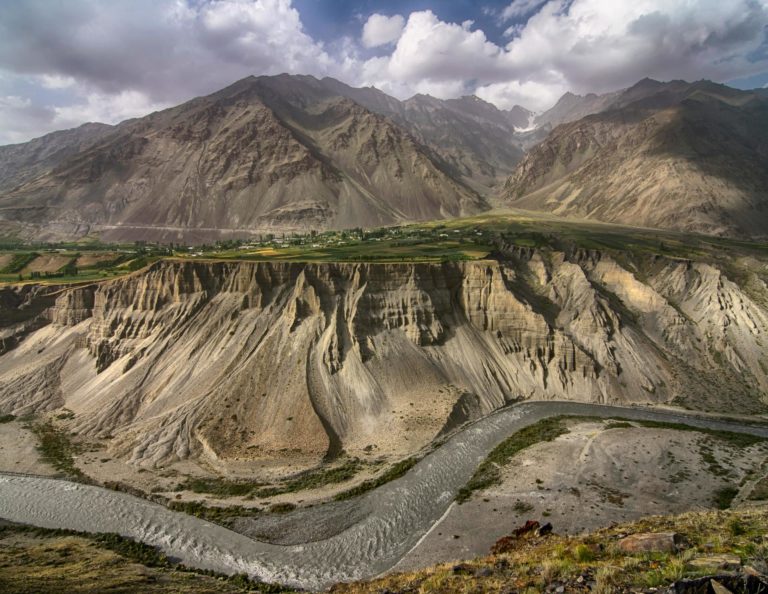
One of Tajikistan’s most remote and least-visited regions, Upper Zerafshan (Gornya Mastcha) lies east of the Fan Darya, between the Zarafshan and Yaghnob Rivers. The valley features high mountain passes, gravel tracks turning into goat paths. The 24 km-long Zarafshan Glacier is surrounded by peaks over 5,000 m. Ancient petroglyphs near Sabakh Village and small high-altitude settlements offer glimpses into centuries-old traditions.
Touristic facilities are minimal: Langar has a basic guesthouse, while Veshab, a UN Millennium Village famous for its stacked houses, is worth an overnight stay. The real highlight is the legendary hospitality, locals are eager to invite visitors for tea, meals, and stories. With its stunning villages, dramatic landscapes, and untouched nature, Upper Zerafshan is a rare destination where travelers can experience authentic mountain life away from the crowds.
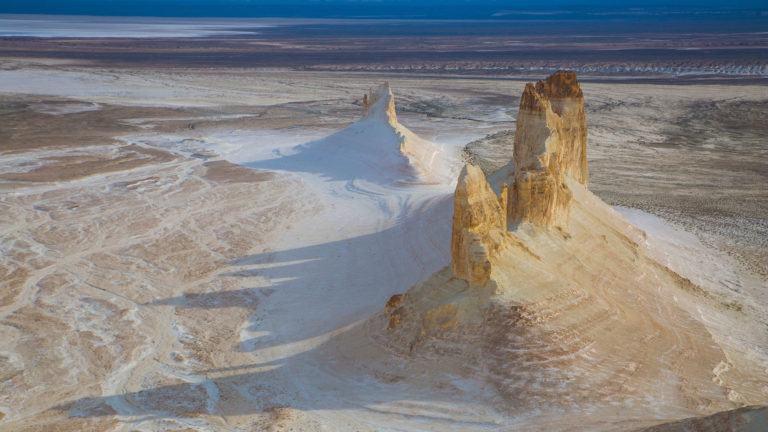
Stretching along the Caspian Sea, Mangystau is one of the most surreal landscapes in Central Asia. It is a land where the steppe meets desert cliffs and ancient rock formations. In recent years, its steppe mountains have started to attract growing attention, especially among photographers seeking epic and otherworldly shots.
Beyond its famous chalk cliffs and underground mosques, Mangystau hides fascinating natural wonders such as Ybykty Canyon, known for its winding corridors and layered rock walls sculpted by time, and the Valley of Balls (Torysh) — a mysterious plain covered with perfectly spherical stones that seem scattered by giants. Together, these sites make Mangystau a true off-the-beaten-path destination, ideal for explorers and photographers.
Nestled in the far east of Kazakhstan, Oskemen is surrounded by dense taiga forests and alpine lakes. It’s a gateway to the Altai Mountains, a region of pristine wilderness where Russia, Mongolia, and China meet. Travelers can explore hidden villages, fish in crystal-clear rivers, and enjoy the hospitality of Kazakh and Russian communities that live in harmony with nature.
The southernmost region of Uzbekistan, Surkhandarya, is often called the cradle of ancient civilizations. It lies in the foothills of the Hissar and Bobotag ranges and offers an impressive blend of natural beauty, archaeology, and living history. This region is home to deep canyons, karst landscapes, ancient caves, and fossil tracks — making it ideal for those who seek both nature and history off the beaten path.
Within Surkhandarya lies the massif Khoja Gur Gur Ota rising to nearly 3,700 m, its limestone cliffs drop sharply into vast canyons, while the upper slopes open into windswept plateaus with fossilised dinosaur tracks, rock formations, and cave systems that remain largely unexplored. This dramatic landscape is perfect for adventurers and photographers alike.
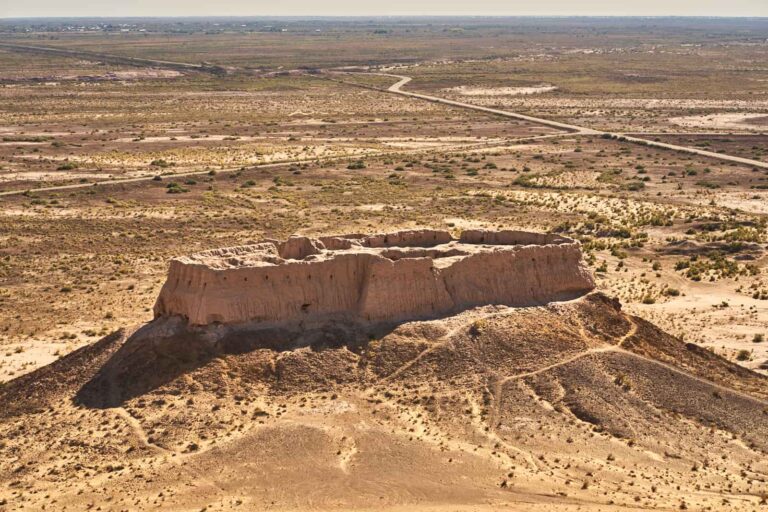
For history and archaeology lovers, the region of ancient Khorezm offers a journey through time. The “land of a thousand fortresses” features a chain of ancient strongholds such as Toprak-Kala, Ayaz-Kala, Kyzyl-Kala, and Suleyman-Kala — each packed with layers of history, defensive architecture, and desert drama. These fortresses, dating back as early as the 3rd century BC, offer immersive exploration for travelers seeking the ancient Silk Road’s hidden stories.
Far from the crowds of Issyk-Kul, Sary-Chelek is a lush alpine paradise dotted with lakes and walnut forests. The main lake, surrounded by steep cliffs, is considered one of the most beautiful in Central Asia. It’s ideal for trekking, bird-watching, and connecting with nature in complete tranquility.
For those looking to venture even further off the beaten path, the Alay Valley is one of Kyrgyzstan’s most underrated and least explored regions. Beyond the familiar Tulpar-Kul and Lenin Peak Basecamp, the valley opens into vast high-altitude plains, remote Kyrgyz villages, and dramatic mountain passes with enormous trekking potential. With most travelers only passing through Sary-Mogul or Sary-Tash, the Alay Valley retains a powerful sense of isolation and authenticity, perfect for adventurers craving raw, unfiltered wilderness.
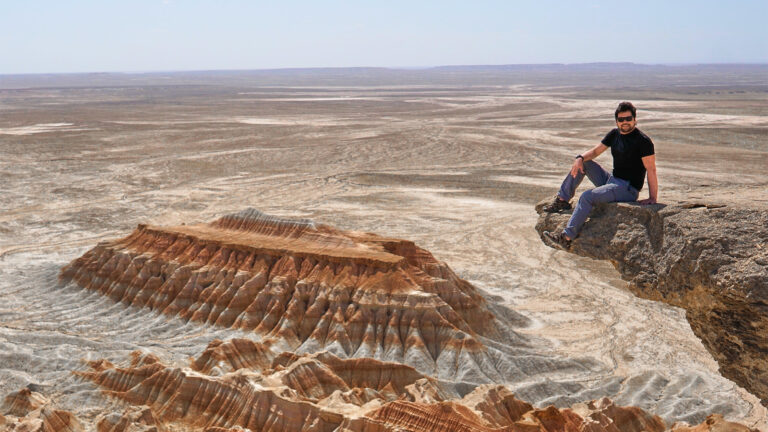
Perhaps Turkmenistan’s most spectacular natural wonder is Yangykala Canyon. It glows in shades of red, pink, and yellow under the desert sun. Often called the “Grand Canyon of Central Asia,” it remains almost entirely unvisited, with few signs of human presence. Reaching it requires a 4×4 journey across remote desert tracks. The adventure itself is half the reward.
Far in Turkmenistan’s eastern corner, the Köýtendag Mountains reveal a side few travelers imagine. You will find rugged peaks, narrow canyons, and underground labyrinths. Lush pockets of nature hide between steep cliffs. Overall, this is the most diverse mountain region in Turkmenistan. At the same time, it contrasts sharply with the country’s vast deserts.
One of the main highlights is the Dinosaur Plateau. Here, large fossilized footprints cover a slanted limestone ridge. As a result, the area feels timeless and mysterious. The dramatic mountain backdrop makes it even more impressive.
Meanwhile, beneath the peaks lies a vast network of karst caves. Some caves display gypsum crystals and striking stalactites. In addition, rare geological formations appear here. You will find few similar sites in Central Asia.
Likewise, deep canyons cut through the mountains. Daraydere and Umbar Dere are popular examples. Cool streams and small waterfalls flow through them. Shaded ravines offer relief during summer heat.
Beyond nature, remote villages add another layer of charm. Life here has changed little over the years. Visitors experience traditional mountain culture firsthand. Ultimately, Köýtendag remains one of Turkmenistan’s most underrated destinations. It suits travelers seeking truly undiscovered landscapes.
© 2023 PARAMOUT JOURNEY.
ALL RIGHTS RESERVED.
DEVELOPED BY TajSoft